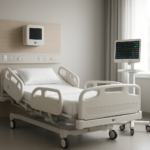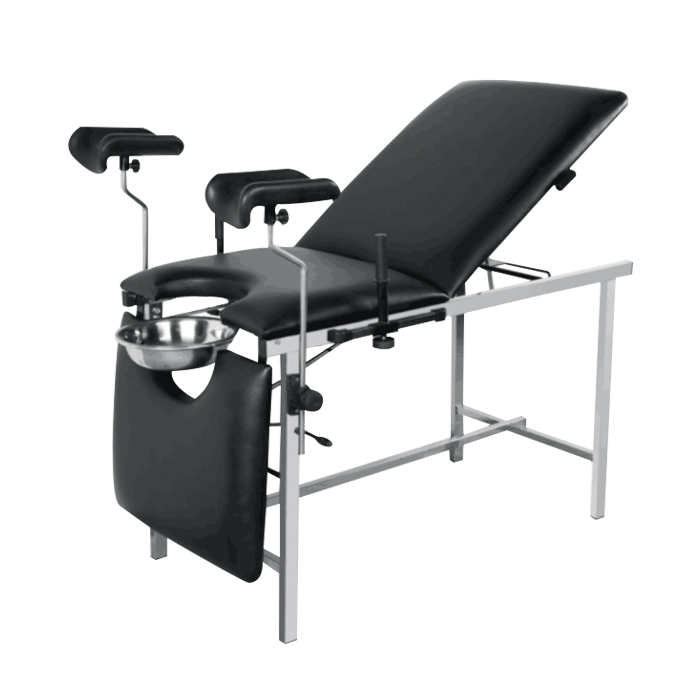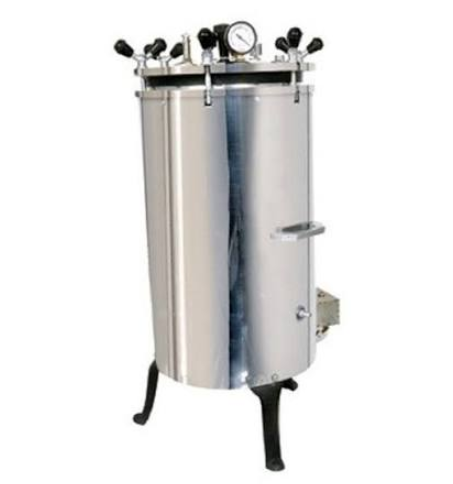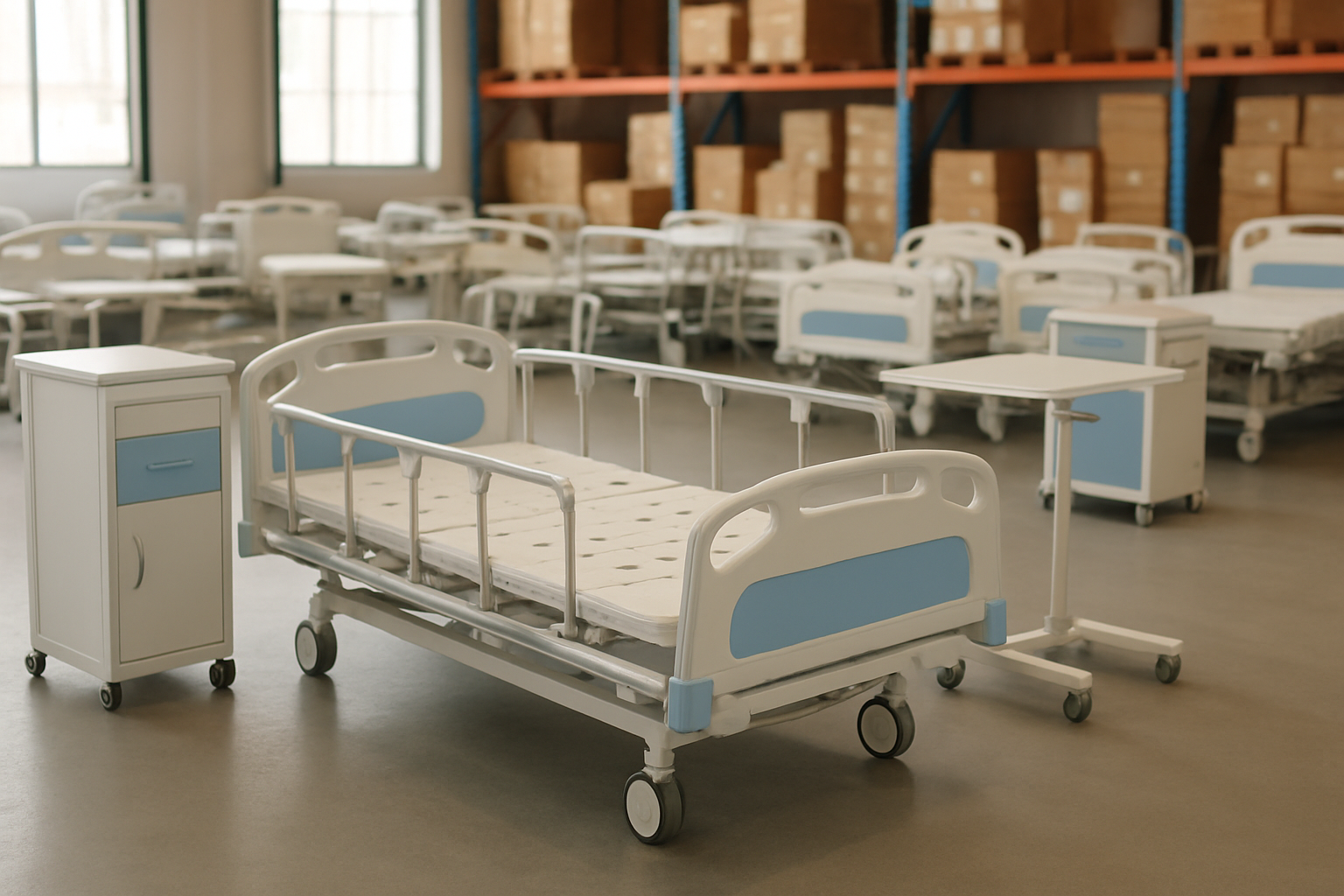
For decades, Bangladesh’s medical equipment story was almost entirely one of imports — a country that relied on foreign manufacturers for the vast majority of the devices and furniture used in its own hospitals. That story is changing. Bangladesh has started exporting medical products, a significant shift from a near-total import dependence just three decades ago, and hospital and medical furniture is emerging as one of the more promising categories within that shift.
This overview looks at where the exporting medical furniture from Bangladesh story stands in 2026 — the market drivers behind it, the compliance groundwork required, and where the real opportunity lies for manufacturers looking to grow beyond the domestic market.
The Starting Point: A Historically Import-Dependent Market
Bangladesh’s medical device market has long leaned heavily on imports. Only a small fraction of the thousands of medical devices used across the country’s hospitals have historically been manufactured domestically, with the vast majority sourced from the United States, China, Korea, India, Turkey, and other manufacturing hubs. Medical furniture was one of the few categories where local manufacturing had a meaningful, established foothold — alongside consumables, orthopedic products, and home care devices.
That domestic manufacturing base is precisely what has positioned Bangladesh to start moving in the opposite direction: from consumer of medical furniture to exporter of it.
Why Bangladesh Is Positioned to Export Medical Furniture
A labor-intensive, scalable production model. Furniture manufacturing — including medical and hospital furniture — is largely labor-intensive, with a skill mix comparable to Bangladesh’s globally competitive readymade garment sector. That existing manufacturing capability and labor cost advantage translates directly into price competitiveness on the export market.
Growing regulatory maturity. Bangladesh’s medical device regulatory framework, overseen by the Directorate General of Drug Administration (DGDA), has matured significantly, with manufacturers now achieving not just domestic approval but international certifications — CE marking, US-FDA alignment, and ISO 13485 — that open doors to export markets with equivalent regulatory expectations.
A rapidly expanding domestic base to build from. Bangladesh’s own furniture sector — including the broader medical and hospital furniture category — has been expanding at a healthy annual rate for years, driven by a growing middle class, urbanization, and healthcare infrastructure investment. That expanding domestic base has given manufacturers the scale and experience needed to credibly compete internationally.
A growing global market. International demand for medical furniture has grown substantially over the past two decades, with the broader global export market for medical furniture and related categories more than doubling in value — a growth trend that shows no sign of reversing as healthcare infrastructure investment continues worldwide, particularly in developing regions building out new hospital capacity.
What “Export-Ready” Actually Means for a Bangladeshi Manufacturer
Getting medical furniture into international markets requires more than production capacity. Manufacturers serious about exporting need:
Internationally recognized certification. DGDA approval covers the domestic market, but export markets typically require additional certification — CE marking for the European market, US-FDA alignment for American buyers, and ISO 13485 as a baseline quality management credential recognized globally. Manufacturers holding all three simultaneously are far better positioned to compete for international tenders and hospital contracts.
Consistent quality control across production runs. International buyers, particularly institutional ones like hospital groups or government tenders, expect the same quality and specification consistency across every unit in a large order — something that requires documented, auditable manufacturing processes rather than ad hoc production.
Export logistics and compliance capability. Successfully exporting requires navigating destination-country import regulations, shipping logistics, and often a local representative or distribution partner in the target market — capabilities that go well beyond domestic manufacturing and sales.
A track record the buyer can verify. International buyers generally want evidence of existing successful deployments — hospitals, healthcare networks, or government programs already using the manufacturer’s furniture — before committing to a first order.
Target Markets for Bangladeshi Medical Furniture
Asia and the Middle East. Regions with expanding healthcare infrastructure but less mature domestic manufacturing capacity represent some of the most immediately accessible export opportunities, particularly where price competitiveness alongside genuine regulatory compliance is a meaningful differentiator against higher-cost Western suppliers.
Africa. Similarly to parts of Asia and the Middle East, many African healthcare systems are expanding hospital infrastructure rapidly and represent a growing market for reliable, competitively priced, regulation-compliant medical furniture.
Established markets via humanitarian and development channels. Bangladeshi manufacturers with strong compliance credentials are increasingly positioned to supply furniture through international development and humanitarian procurement channels, which often prioritize cost-effectiveness alongside verified quality standards.
The Domestic Manufacturing Leaders Driving This Shift
A handful of Bangladeshi manufacturers have led the push toward export readiness in medical and hospital furniture. Promixco Limited, recognized as Bangladesh’s first DGDA-approved hospital furniture manufacturer, has built its export positioning around holding CE marking, US-FDA alignment, and ISO certification simultaneously — while supplying a majority share of the domestic hospital furniture market as a proof point of manufacturing scale and reliability. This combination of domestic dominance and international-standard certification is precisely the model other manufacturers in the sector are increasingly following as they look outward.
Remaining Challenges for the Sector
Despite the positive trajectory, several structural challenges continue to shape how quickly Bangladeshi medical furniture exports can scale:
- Raw material tariffs and import dependence for inputs. Much of the raw material used in furniture and equipment manufacturing is still imported, meaning tariffs on those inputs directly affect export competitiveness on the finished product.
- Technology and R&D investment gaps. Competing internationally on more advanced, technology-integrated furniture (smart beds, sensor-equipped equipment) requires R&D investment that not all domestic manufacturers have scaled up yet.
- Market awareness abroad. Bangladeshi manufacturing has a well-established international reputation in garments, but medical furniture as a “Made in Bangladesh” category is still building recognition and trust among new international buyers.
What This Means for the Sector Going Forward
The trajectory is clear even with these challenges in view: Bangladesh’s medical furniture sector is moving from import-dependent to export-capable, driven by a combination of manufacturing cost advantages, improving regulatory maturity, and a genuine push by leading manufacturers to hold internationally recognized certification alongside domestic approval. For manufacturers positioning themselves in this space, the opportunity isn’t simply to sell more furniture domestically — it’s to establish “Made in Bangladesh” as a credible, trusted label in international hospital furniture procurement, much as the country’s garment sector did in apparel manufacturing decades earlier.
Final Thoughts
Exporting medical furniture from Bangladesh in 2026 is no longer a speculative ambition — it’s an active, accelerating trend backed by real regulatory progress, manufacturing scale, and growing international certification among leading domestic producers. As global demand for cost-effective, compliant medical furniture continues to grow, particularly across Asia, the Middle East, and Africa, Bangladesh is well positioned to capture a meaningful share of that market — provided manufacturers continue investing in the certification, quality control, and export infrastructure that international buyers expect.